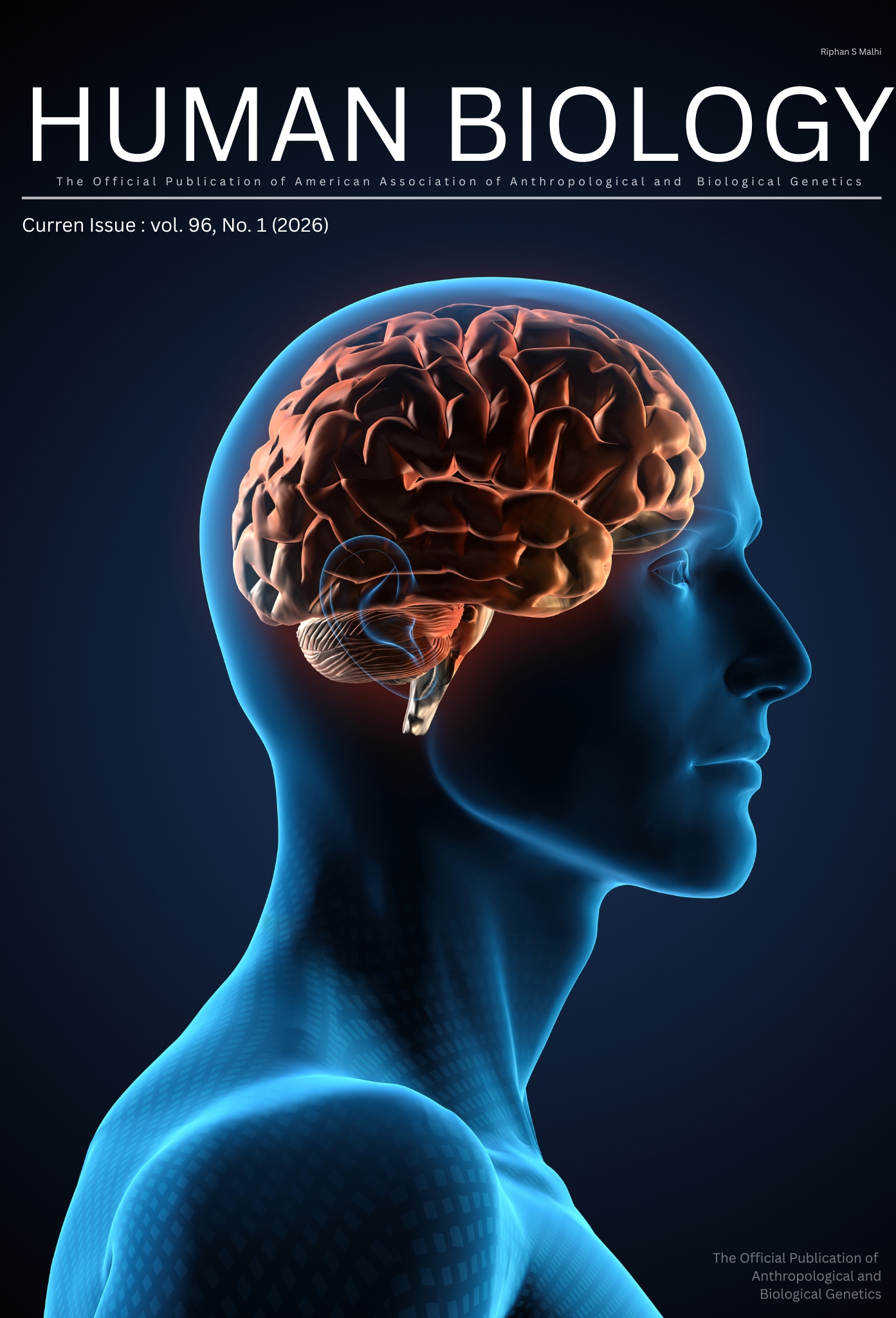
About the Journal
Human Biology is an international, peer-reviewed scholarly journal publishing research across human biology and related interdisciplinary fields. The journal provides a platform for researchers, academics, and professionals to communicate original research, reviews, and other scholarly contributions concerning human populations, biological variation, genetics, evolution, development, health, and interactions between humans and their environments.
The journal has a broad multidisciplinary scope and welcomes scientifically rigorous research that contributes to the understanding of human biology from biological, biomedical, genetic, anthropological, epidemiological, environmental, nutritional, demographic, and population-based perspectives.
Human Biology encourages research that connects different disciplines and approaches where such integration contributes to the understanding of human populations, biological variation, human health, evolution, and related biological processes.
All manuscripts are evaluated according to the journal's editorial policies and peer-review procedures. Authors are expected to meet appropriate standards of scientific integrity, research ethics, transparency, and responsible reporting.
Journal Scope
Human Biology covers a broad range of research areas within human biology and related interdisciplinary sciences.
Human Genetics and Genomics
Research concerning human genetic variation, genomics, molecular genetics, population genetics, genetic diversity, genomic variation, ancestry, inheritance, adaptation, and genetic factors associated with human health and disease.
Population Genetics
Research examining genetic variation within and between human populations, population structure, genetic diversity, migration, demographic history, evolutionary processes, adaptation, and population differentiation.
Anthropology and Human Biological Variation
Research in biological anthropology, evolutionary anthropology, human variation, population biology, human evolution, biological diversity, morphology, and related anthropological investigations.
Ancient DNA and Paleogenomics
Research involving ancient DNA, paleogenomics, archaeological genetics, biomolecular analysis of human and other biological remains, ancestry, population history, evolutionary relationships, and related approaches to reconstructing biological history.
Human Population Biology
Research examining human populations from biological, demographic, geographic, and environmental perspectives, including population structure, migration, displacement, geographic variation, secular trends, climate-related effects, adaptation, and population-level biological processes.
Human Anatomy and Morphology
Research concerning the structure, organization, morphology, and variation of the human body, including organs, tissues, bones, muscles, anatomical structures, and related areas of human morphology.
Human Physiology
Research addressing the functions and biological processes of the human body, including physiological systems, homeostasis, adaptation, regulation, metabolism, and interactions among physiological systems.
Human Health, Disease and Immunology
Research concerning human health and disease, including infectious diseases, immunology, molecular mechanisms of disease, host–pathogen interactions, virology, bacteriology, parasitology, mycology, disease prevention, diagnosis, transmission, and control.
Epidemiology and Population Health
Research examining the distribution, determinants, prevention, and control of diseases and health-related conditions in human populations, including epidemiological methods, population-level studies, genetic epidemiology, and public-health research.
Human Nutrition and Lifestyle
Research concerning human nutrition, dietary patterns, nutritional status, biomarkers, dietary assessment, breastfeeding, energy balance, nutritional requirements, eating behaviour, lifestyle factors, nutrition across the life course, and relationships between nutrition and human health.
Environmental and Ecological Human Biology
Research examining interactions between humans and their biological, ecological, and physical environments, including environmental influences on human populations, adaptation, ecological conditions, environmental health, and relationships between human populations and their surroundings.
Human Growth and Development
Research concerning human growth, development, maturation, developmental biology, life-course biology, and biological variation across different stages of human development.
Bioarchaeology and Forensic Anthropology
Research applying biological and anthropological approaches to archaeological and forensic questions, including human skeletal biology, biological profiles, population history, health, disease, trauma, identification, and analysis of human remains.
Interdisciplinary Research
Human Biology particularly welcomes interdisciplinary research.
Many questions concerning human populations and human health require approaches that cross traditional disciplinary boundaries. The journal therefore welcomes studies integrating two or more fields, including genetics, genomics, anthropology, evolutionary biology, biomedical sciences, epidemiology, environmental biology, nutrition, demography, anatomy, physiology, and related disciplines.
Interdisciplinary manuscripts should have clearly defined scientific objectives and demonstrate how the integrated approach contributes to the understanding of human biology or related human biological processes.
Types of Contributions
Human Biology considers scholarly manuscripts appropriate to its scope, including:
- Original Research Articles
- Review Articles
- Systematic Reviews
- Meta-analyses
- Short Communications
- Methodological and Technical Studies
- Data and Resource Articles
- Case Studies where scientifically appropriate
- Perspectives and Commentary
- Interdisciplinary Research
- Special Issue Contributions
The journal's current submission requirements, peer-review procedures, publication policies, ethical requirements, copyright conditions, and open-access terms are described in the relevant sections of this website.
Open Access Publishing
Human Biology publishes research through an open-access model designed to make scholarly content freely accessible to readers worldwide.
Open access allows researchers, students, educators, healthcare professionals, institutions, and other readers to access published research without subscription barriers.
The journal supports the broad dissemination of scientific research and encourages responsible sharing and reuse of scholarly work in accordance with the applicable copyright and licensing terms.
Authors should consult the journal's current Open Access Policy, Copyright and Licensing Policy, and Publication Charges information for the specific terms applicable to their manuscript.
Peer Review and Research Integrity
Human Biology follows editorial and peer-review procedures intended to support the scientific quality and integrity of published research.
Submitted manuscripts may be evaluated for:
- relevance to the journal's scope;
- scientific originality and contribution;
- methodological quality;
- appropriate analysis and interpretation;
- ethical compliance;
- accuracy and completeness of reporting;
- conflicts of interest;
- research integrity; and
- compliance with the journal's publication requirements.
Research involving human participants, identifiable biological materials, genetic information, or other ethically sensitive data must comply with applicable ethical and regulatory requirements.
The journal expects authors, reviewers, and editors to maintain appropriate standards of research integrity, transparency, confidentiality, and responsible scholarly communication.
International and Multidisciplinary Community
Human Biology welcomes submissions from researchers and institutions worldwide.
The journal supports communication across disciplinary and geographic boundaries and encourages research that contributes to a broader understanding of human biological variation, human populations, health, evolution, and the biological relationships between humans and their environments.
Journal Information
Journal: Human Biology
Subject Area: Human Biology and Related Interdisciplinary Sciences
Publishing Model: Open Access
Peer Review: Peer Reviewed
Article Types: Research Articles, Reviews, and other scholarly contributions
Website: https://www.thehumbiol.org/
For manuscript submission, author instructions, publication ethics, open-access policies, and current journal information, please refer to the relevant sections of the journal website.